-- Screw Frigates
| Note: These three ships were all laid down in 1854 but to different designs. They all had modest steam power as an auxiliary to their sails and an armament exclusively of shell guns. Franklin was officially considered to be the the old ship of the line of that name razeed and rebuilt, and work on her progressed slowly because of the need to rely on limited repair appropriations. The hull lines of Colorado and her sister Roanoke (later converted into an ironclad) were almost identical to those of Franklin which may have been their prototype. Wabash, built to a different design also by John Lenthall, was considered a fast and sure vessel. |
|
USS Franklin (1864-1916) European Station, 1869-1877. Shown at the Boston Navy Yard with her after funnel raised and the forward one lowered. Between 1869 and 1877 she cruised primarily on the European Station, with most of 1872 and 1873 in reserve. Photo No. NH 54189 Source: U.S. Naval History and Heritage Command |
 |
|
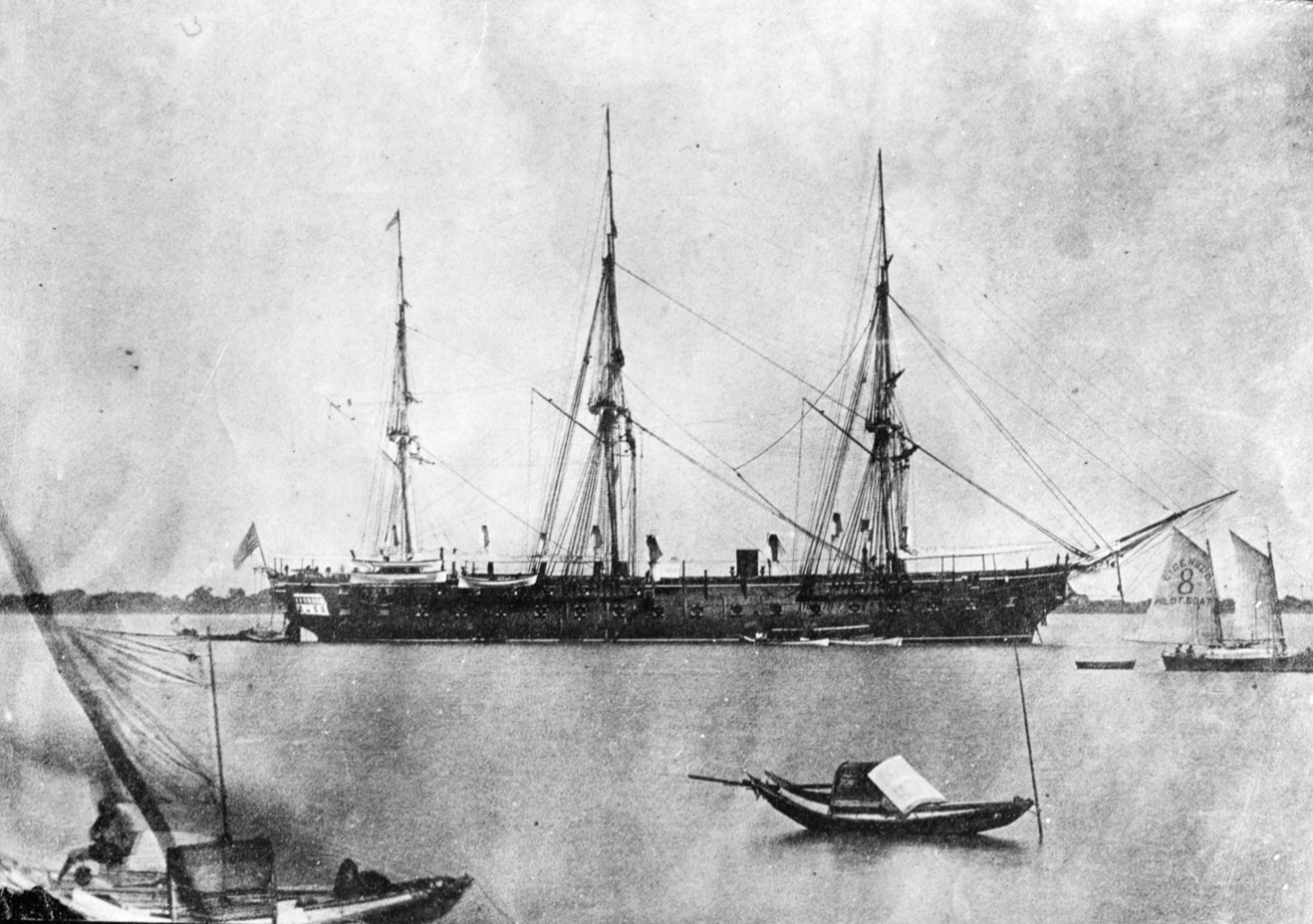
USS Colorado (1856-1885) Asiatic and North Atlantic Stations, 1870-1875. Shown at Woosung, China, circa 1871 with her single funnel partly raised and a pilot boat on the right. Colorado cruised on the Asiatic Station in 1871-1873, mostly as station flagship, including a diplomatic mission to Korea that ended in a punitive action against the Koreans. After a refit in 1873 she finished up on the North Atlantic Station from December 1873 into 1875. Photo No. NH 55262 Source: U.S. Naval History and Heritage Command |
 |
|
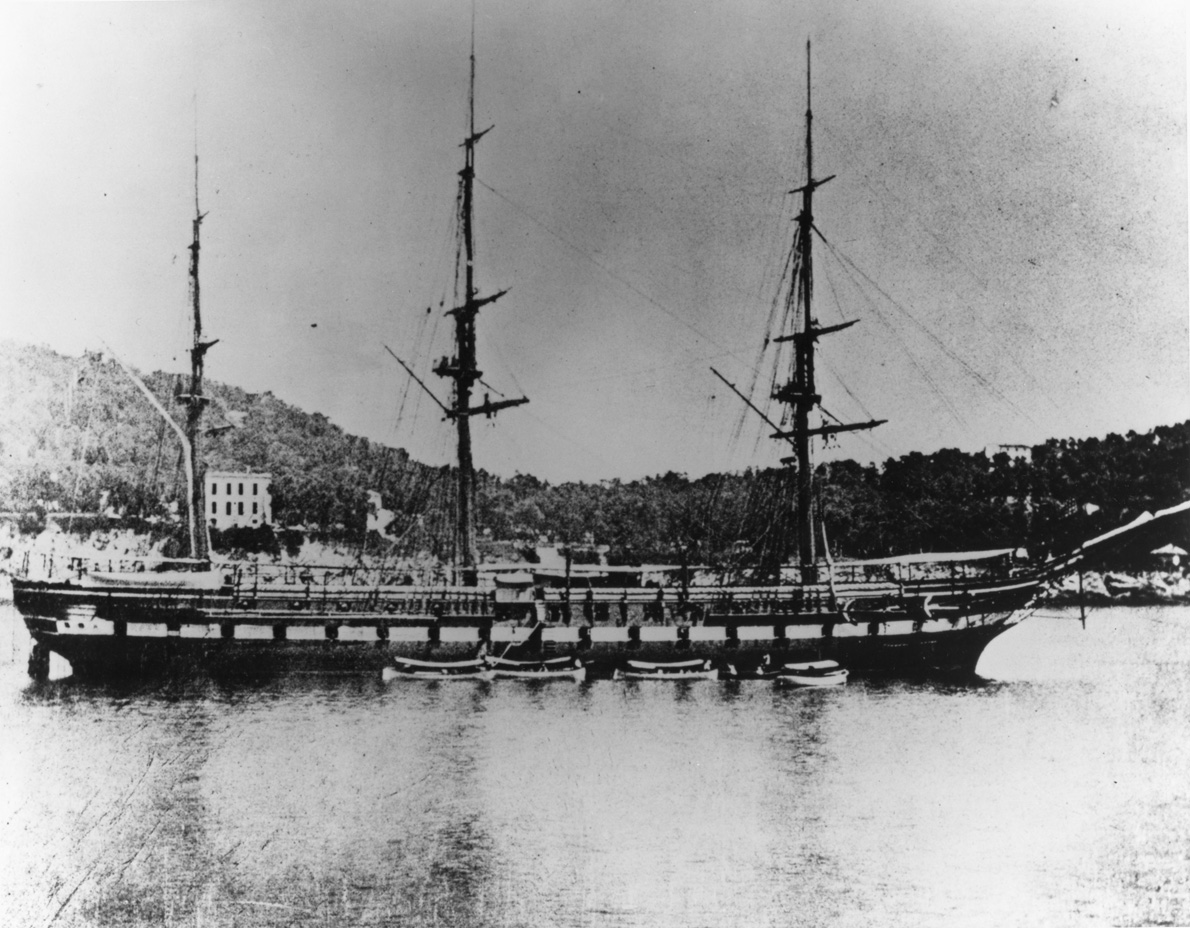
USS Wabash (1855-1912) European Station, 1871-1873. Photographed in the Mediterranean, probably at Villefranche, France, circa 1871-1873, with her single funnel lowered. Photo No. NH 44508 Source: U.S. Naval History and Heritage Command, courtesy Bethlehem Steel Corp. Archives, Skerritt Collection |
 |
-- Protected Cruisers, 1885-1890
| Note: On 3 March 1883 Congress authorized "one steel cruiser of not less than 4,300 tons displacement" (Chicago) and three other ships. On 3 March 1885 Congress authorized "two cruisers of not less than 3,000 nor more than 5,000 tons displacement" (Newark and the 2nd Rate Charleston). On 3 August 1886 Congress authorized "one protected double-bottomed cruiser of not less than 3,500 nor more than 5,000 tons displacement" (Baltimore), and on 3 March 1887 it authorized an additional "two steel cruisers ... with a maximum apeed of at least 19 knots" (Philadelphia and San Francisco). These five ships (then 4,083 to 4,600 tons) were downgraded from First Rate to Second Rate on 1 January 1892. They are listed in the tables throughout as Second Rate, Large. |
|
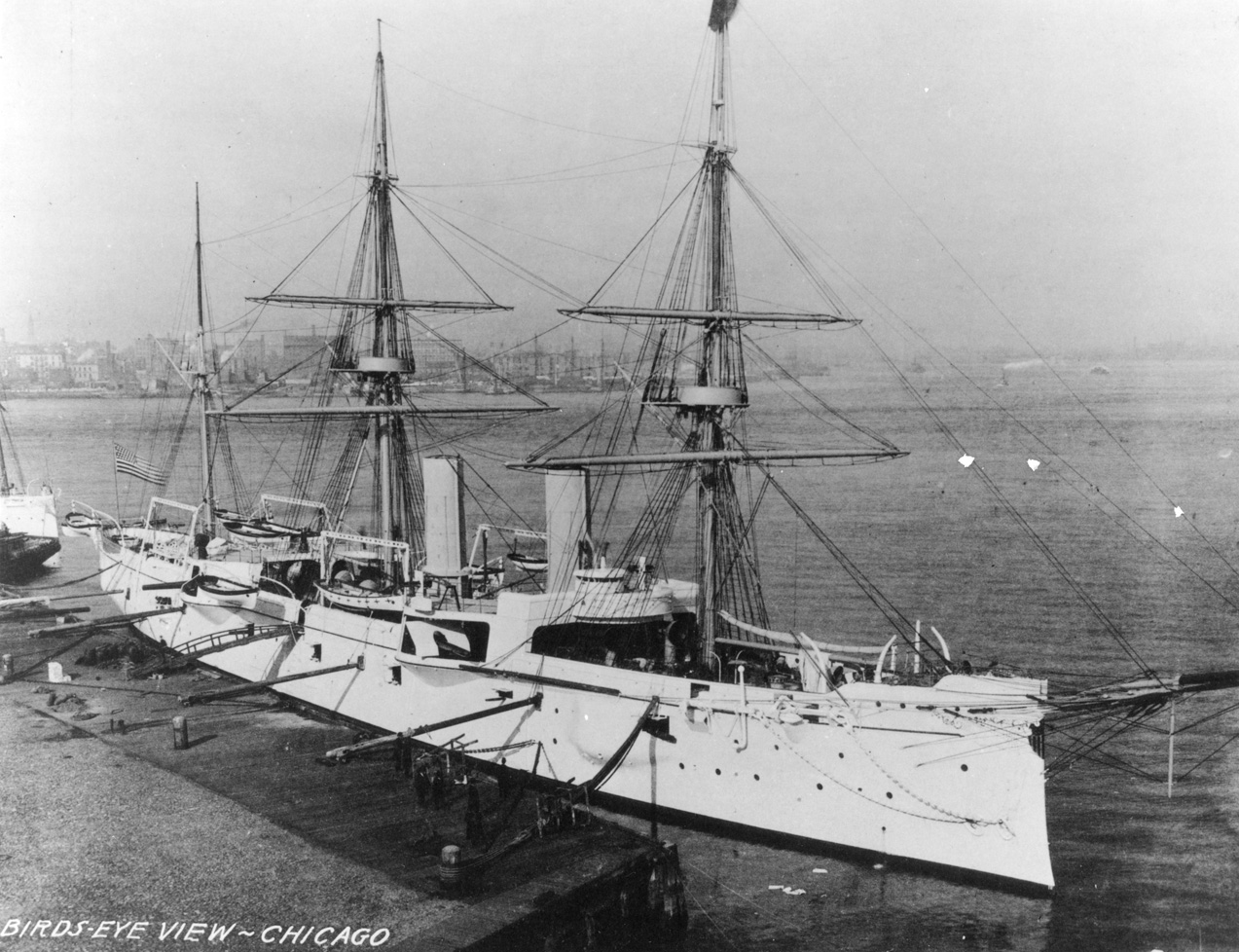
USS Chicago (1885-1935) North Atlantic and European Stations and Squadron of Evolution, 1889-1895. Chicago with the smaller cruisers Atlanta and Boston and the dispatch boat Dolphin became the "ABCD" squadron, the first four ships in America's "New Navy" of steel warships. Key design features for Chicago included 8" guns on sponsons for chasing merchant ships and a covered main deck battery. Photo No. NH 61856 Source: U.S. Naval History and Heritage Command |
 |
|
USS Baltimore (Cruiser No. 3, 1888-1937) North Atlantic, Pacific, and Asiatic Stations, 1890-1898. This ship was built to plans for an unsuccessful proposal for a Spanish cruiser that became Reina Regente that the Navy purchased from Armstrong Mitchell & Co. Like Chicago she carried four 8" guns bearing fore and aft but unlike the other four ships in this group she had no sail power. Photo No. det-4a14008 Source: U.S. Library of Congress, Detroit Publishing Co. collection |
 |
|
USS Newark (Cruiser No. 1, 1890-1913) North Atlantic and South Atlantic Stations, 1891-1897. The Navy designed this ship itself, apparently giving priority to seakeeping and flagship qualities. Her entire main battery was made up of 6" guns because her designers felt it was impossible to mount 8" guns in sponsons on a 4,000-ton cruiser. Photo No. det-4a13939 Source: U.S. Library of Congress, Detroit Publishing Co. collection |
 |
|
USS Philadelphia (Cruiser No. 4, 1889-1926) North Atlantic and Pacific Stations, 1890-1897. This ship duplicated the hull of Baltimore but was rigged with fore and aft sails only and had 6" rather than 8" guns on the forecastle and poop. Photo No. det-4a14659 Source: U.S. Library of Congress, Detroit Publishing Co. collection |
 |
|
USS San Francisco (Cruiser No. 5, 1889-1937) Pacific, North Atlantic, South Atlantic, and European Stations, 1890-1898. This ship duplicated the hull of Newark, but with the sponsons fore and aft deleted and their 6" guns placed on the forecastle and poop. Photo No. det-4a14708 Source: U.S. Library of Congress, Detroit Publishing Co. collection |
 |
-- Olympia, 1892
| Note: On 7 September 1988 Congress authorized eight cruisers including "one steel cruiser of about 5,300 tons displacement (Olympia). This protected cruiser (then 5,870 tons) was downgraded from First Rate to Second Rate by 1 July 1901, tonnage having ceased to determine rate. She is listed in the tables throughout as Second Rate, Large. |
|
USS Olympia (Cruiser No. 6, 1892-1957) Asiatic Station, 1895-1898. Shown off the Mare Island Navy Yard circa July 1895. This famous ship was conceived as a fast (21-knot) commerce destroyer with great endurance and a rapid fire 5" secondary gun battery. Photo No. NH 76121 Source: U.S. Naval History and Heritage Command |
 |
-- Armored Cruisers
| Note: On 7 September 1988 Congress authorized seven cruisers including "one armored cruiser of about 7,500 tons displacement (New York). On 19 July 1892 Congress authorized "one armored cruiser [Brooklyn] of about 8,000 tons displacement of the general type of the armored cruiser numbered two (New York).... It shall exhibit a speed of at least 20 knots." |
|
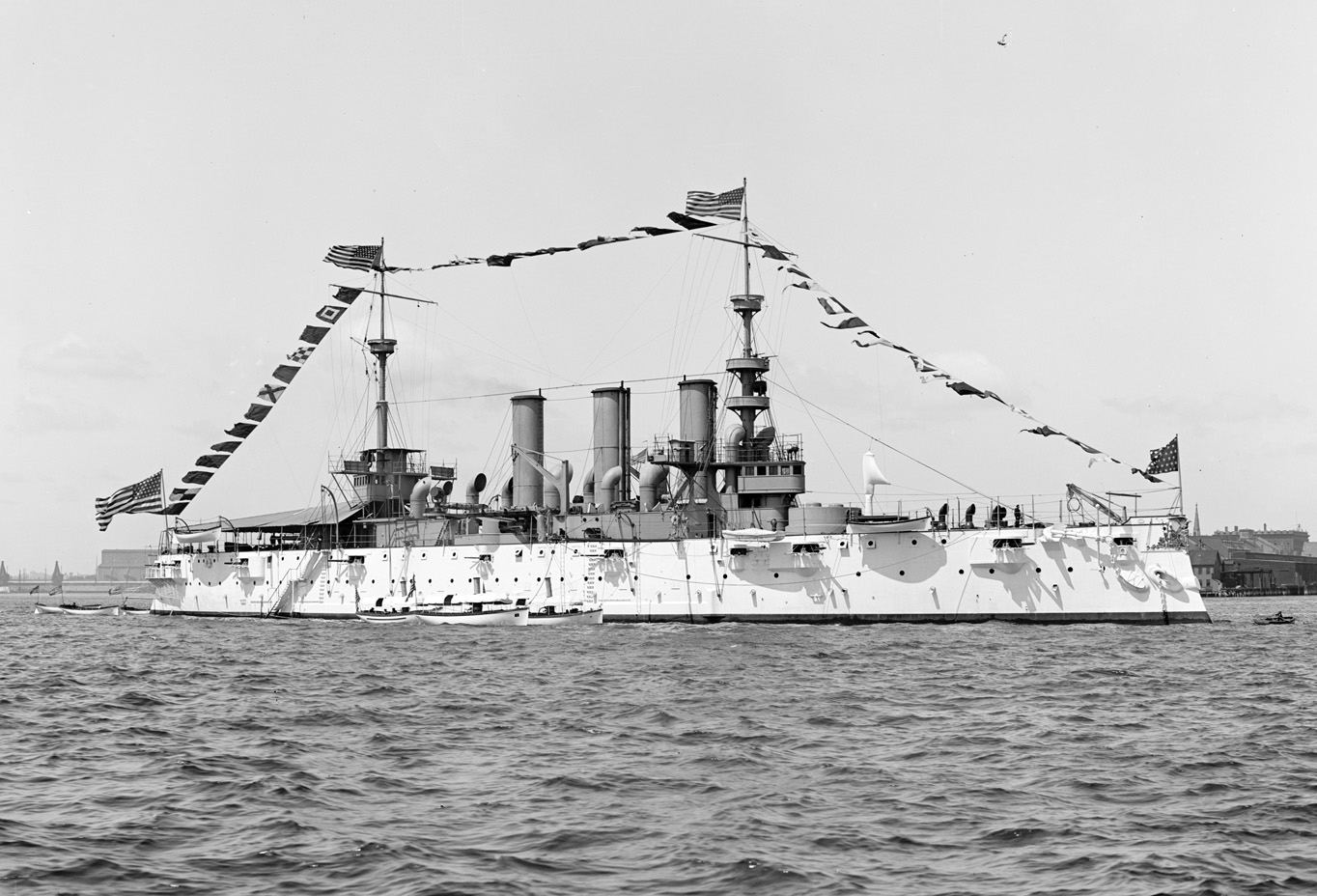
USS New York (Armored Cruiser No. 2, 1891-1938) South Atlantic and North Atlantic Stations, 1893-1898. In this ship, thin (4") belt armor and substantial protection for the gun battery were introduced to provide protection against the new threat from rapid fire guns. The ship's primary missions were raiding commerce and destroying enemy commerce raiders, although she was also to be able to survive a "momentary encounter" with a battleship. Armored Cruiser No. 1, Maine, was reclassified as a 2nd Class Battleship. Photo No. det-4a04926 Source: U.S. Library of Congress, Detroit Publishing Co. collection |
 |
|
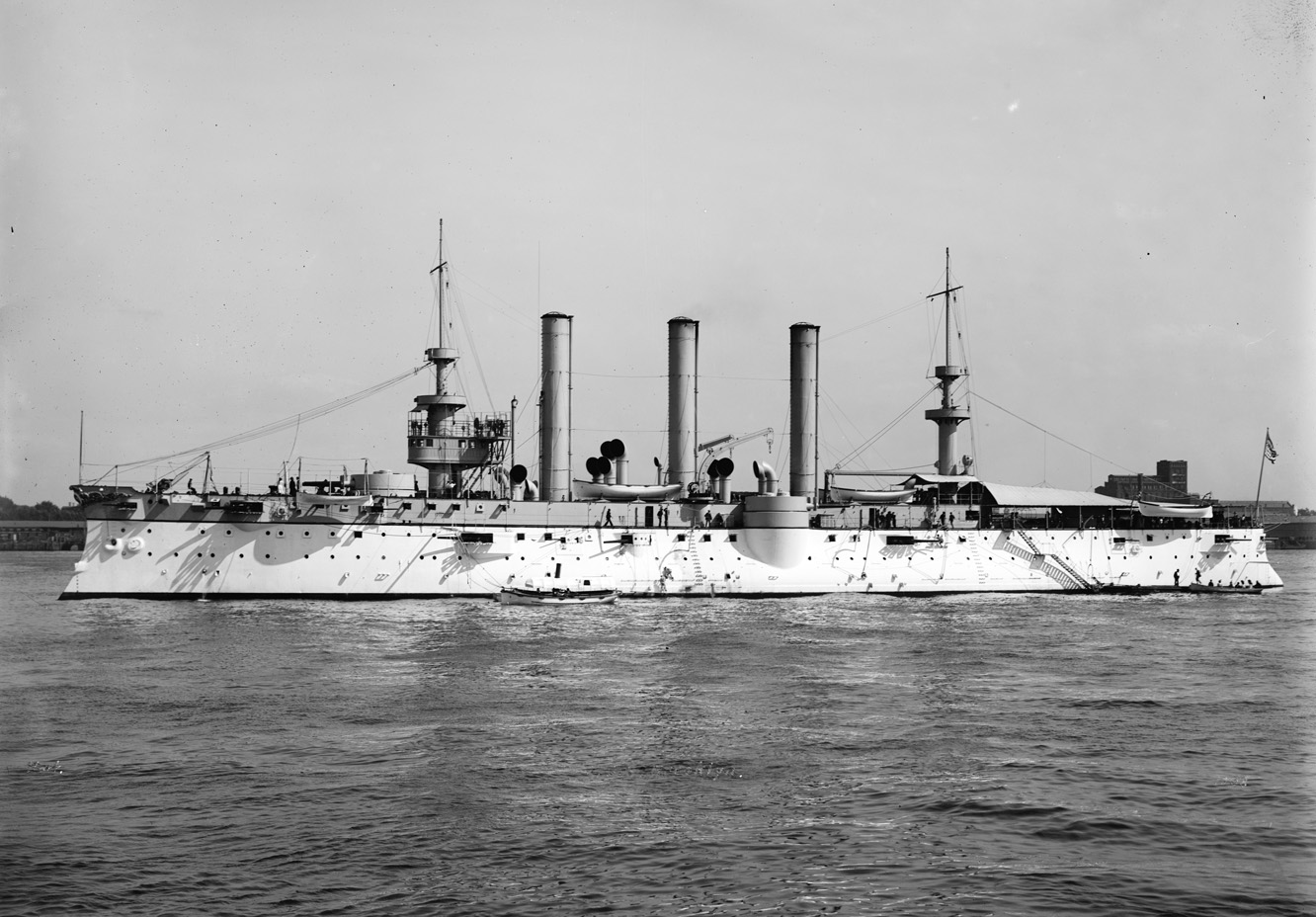
USS Brooklyn (Armored Cruiser No. 3, 1895-1921) European and North Atlantic Station and Special Service Squadron, 1896-1898. In this ship, Brooklyn, the increase in displacement allowed the addition of a forecastle and two more 8" guns. The belt armor was reduced to 3" and the caliber of the rapid fire secondary battery guns was increased from 4" to 5". The sides were given considerable tumble-home to permit axial fire from the turrets in the waist, and the tall funnels gave increased natural draft to the boilers. Photo No. det-4a14034 Source: U.S. Library of Congress, Detroit Publishing Co. collection |
 |
-- Fast Protected Cruisers
| On 30 June 1890 Congress authorized "one protected cruiser of about 7,300 tons displacement ... to have a maximum speed of not less than 21 knots" (Columbia), and on 2 March 1891 it authorized a second such ship (Minneapolis). These two ships were intended as specialized commerce raiders, specifically for hunting down North Atlantic liners, which in wartime might be fitted out as auxiliary cruisers. They carried 6" guns except for a single 8" gun aft, which may have been for discouraging cruisers from chasing them. These two lightly protected cruisers (then 7,375 tons each) were downgraded to Second Rate by 1 July 1901, tonnage having ceased to determine rate. They are listed in the tables as First Rate. |
|
USS Columbia (Cruiser No. 12, 1892-1921) North Atlantic Station, 1894-1897. These ships had nearly identical power plants with four boiler rooms. In Columbia each boiler room had its own funnel. Photo No. det-4a14182 Source: U.S. Library of Congress, Detroit Publishing Co. collection |
 |
|
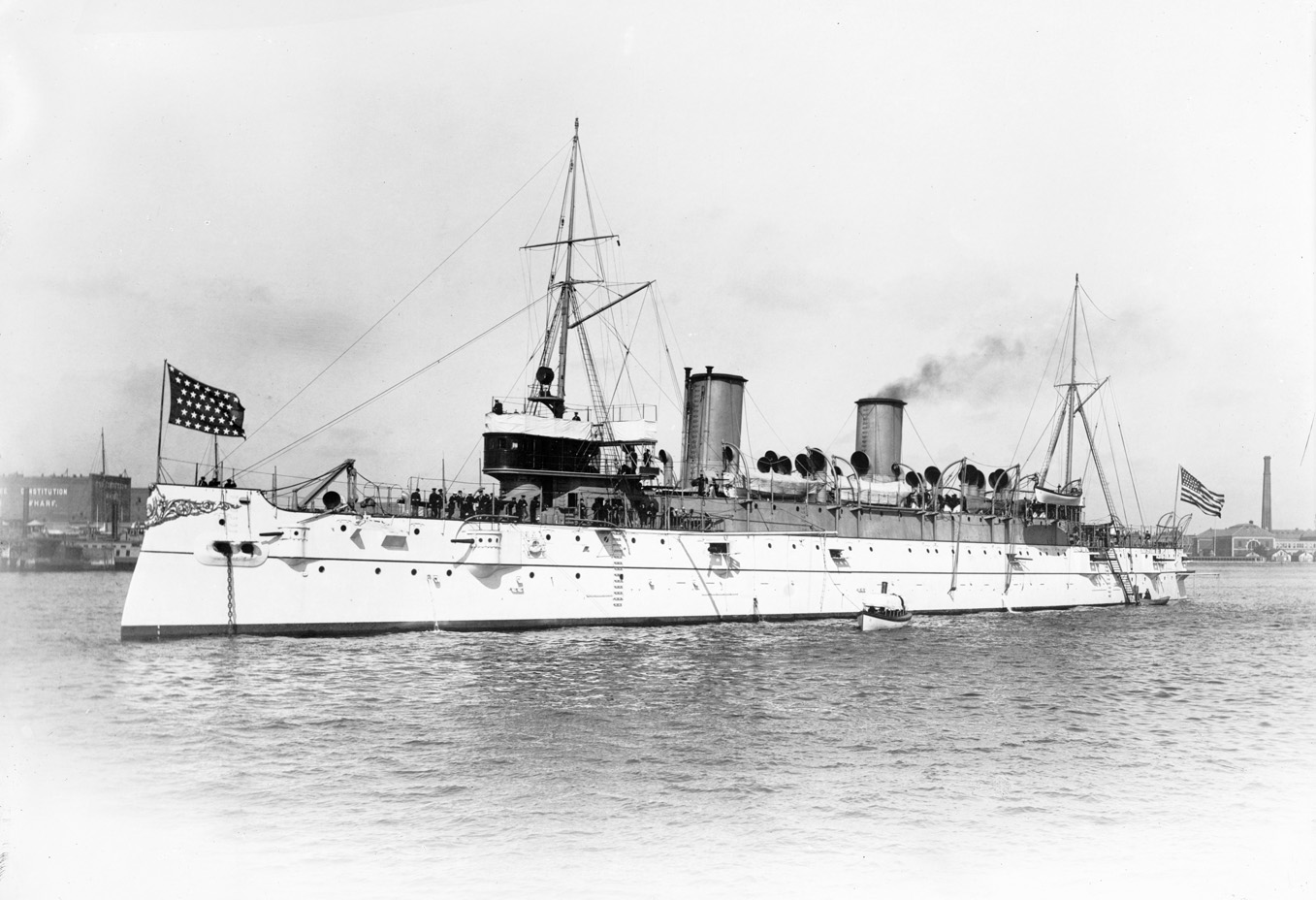
USS Minneapolis (Cruiser No. 13, 1893-1921) North Atlantic and European Stations, 1894-1897. In Minneapolis the uptakes from the four boiler rooms were trunked into two enlarged funnels. Photo No. det-4a14440 Source: U.S. Library of Congress, Detroit Publishing Co. collection |
 |