| Beginning in 1872 the Navy categorized its ships in four rates, 1st through 4th, which were based on displacement tonnage. Analysis of the 2nd and 3rd Rates showed that both contained two lines of development, one larger and one smaller, and this totally unofficial subdivision is used here. The break for 2nd Rates was at around 2500 tons. |
-- Paddle sloops, large (ex steam frigates)
|
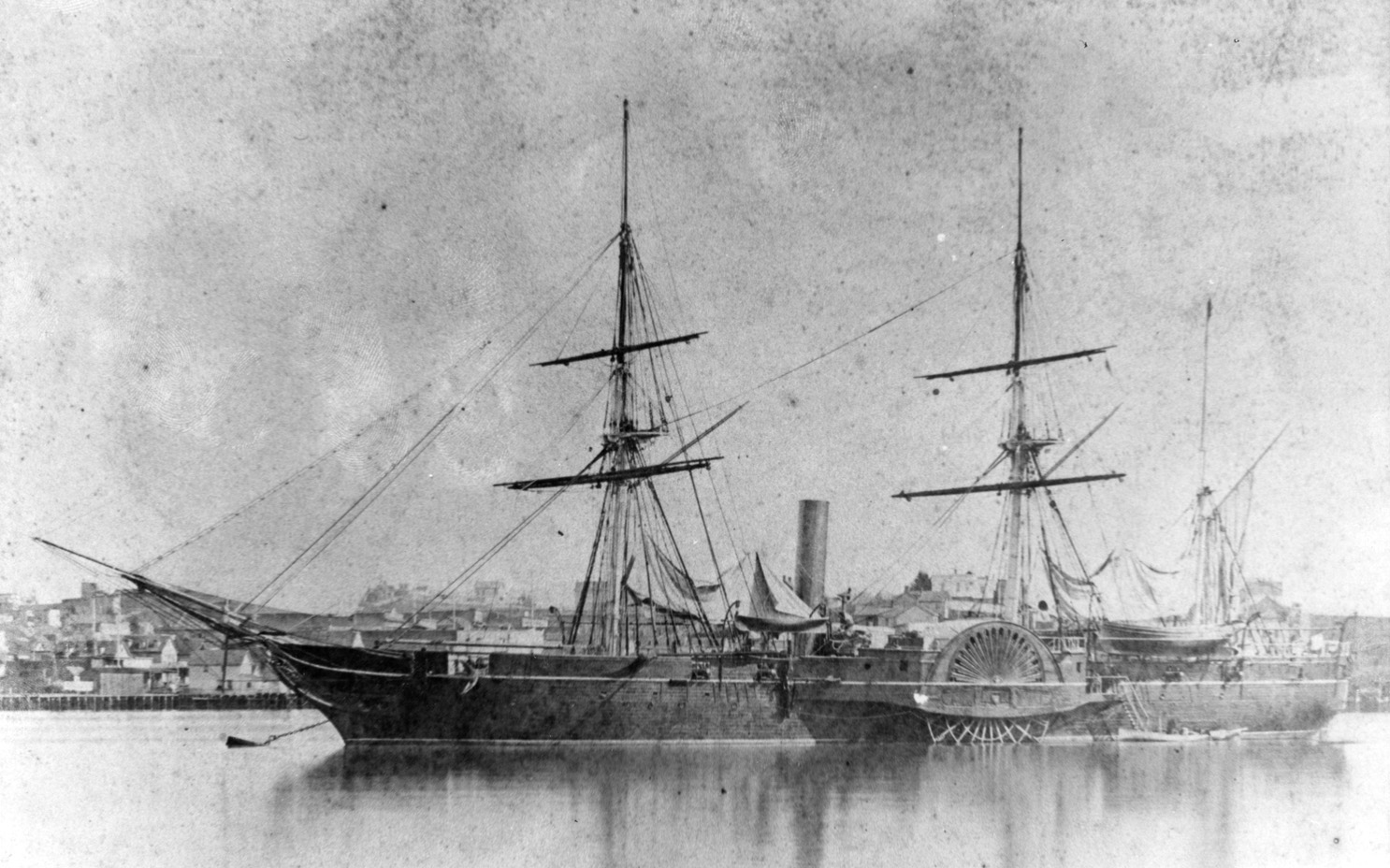
USS Saranac (1848-1875) North and South Pacific Stations, 1869-1875. She was a graceful steamer with reliable machinery. She was wrecked in British Columbia on 18 June 1875. Photo No. NH 61856 Source: U.S. Naval History and Heritage Command |
 |
|
USS Powhatan (1850-1887) North and South Atlantic Stations, 1868-1886. This successful vessel remained a dependable cruiser for over 30 years. Photographed circa 1891. Photo No. NH 84816 Source: U.S. Naval History and Heritage Command |
 |
-- Hartford Group
| Note: These five ships were successors to three large sail spar-deck corvettes cut down from frigates (Cumberland and Macedonian razeed, Constellation "rebuilt"), which had their batteries on a single covered gun deck plus, in Cumberland, large pivoted shell guns on the ends of the spar deck. |
|
USS Richmond (1860-1919) European, North and South Atlantic, Pacific, and Asiatic Stations, 1869-1890. Shown off Vallejo, Calif., before 1877 as built with an open main deck battery. Brooklyn, Hartford, and Pensacola were also built with open batteries. Richmond never received a spar deck, but in an 1877-1878 refit she received a pivot gun with wide ports forward of her stack and had her forecastle and poop strengthened. Photo No. NH 63450 Source: U.S. Naval History and Heritage Command |
 |
|
USS Lancaster (1858-1933) South Atlantic, European, and Asiatic Stations, 1869-1897. Shown essentially as completed with a full spardeck covering her battery, which she retained throughout her career. She was the model for the later Trenton, and between 1878 and 1881 was rebuilt with a ram bow below the waterline resembling that in Trenton and a huge gilt eagle figurehead under the bowsprit. Photo No. NH 60253 Source: U.S. Naval History and Heritage Command |
 |
|
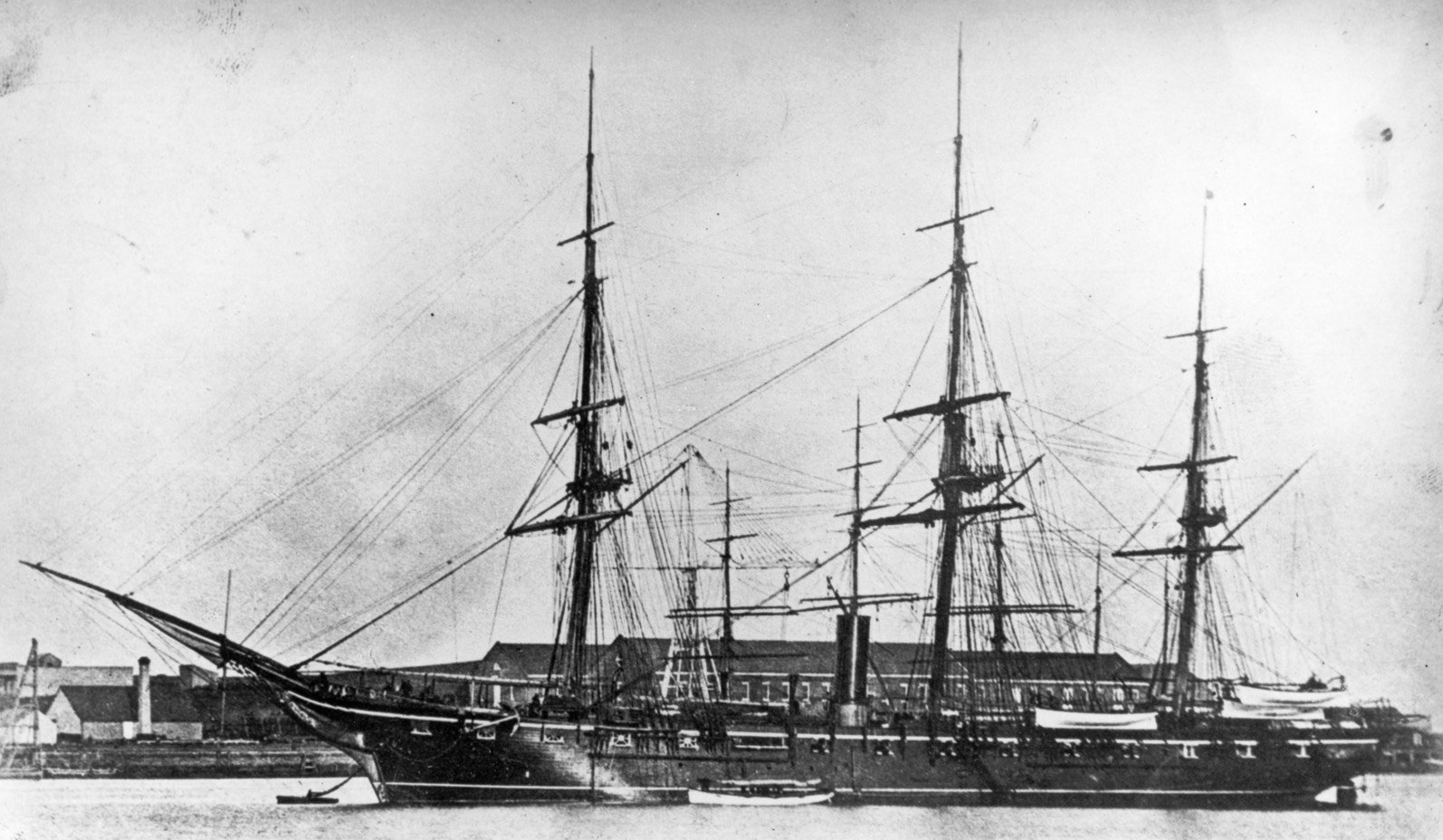
USS Hartford (1858-1956) Asiatic, North and South Atlantic, and Pacific Stations, 1872-1887. Shown after her 1880-82 refit in which the center portion of the spardeck added in her 1869-1872 refit was removed, leaving a heavy forecastle and poop. She also received the engines of the cancelled Kewaydin converted to compound. In 1887 she was rerigged as a bark and fitted as a training vessel. Photo No. NH 81839 Source: U.S. Naval History and Heritage Command |
 |
|
USS Pensacola (1859-1912) Pacific, European, and North Atlantic Stations, 1868-1892. Photographed at Alexandria, Egypt, in 1886. She received a complete spar deck in a 1870-1871 refit, which she retained, and new boilers with two funnels from Benicia in 1878. She reverted to one funnel in 1889. Photo No. NH 44992 Source: U.S. Naval History and Heritage Command |
 |
|
USS Brooklyn (1858-1891) European, North and South Atlantic and Asiatic Stations, 1870-1889. Firing a salute at New York on 29 April 1889 during a Naval Display on the 100th anniversary of the inauguration of George Washington. She had arrived there on 24 April from the Asiatic Station and was soon to leave service. Built with an open main deck battery, she received a full spar deck in a 1869-1870 refit under orders from Admiral Porter but had the center portion removed in a 1879-1881 refit, leaving a heavy forecastle and poop. Photo No. NH 93917 Source: U.S. Naval History and Heritage Command |
 |
-- Wampanoag Group
| Notes: The Wampanoags were described when ordered in 1863 with the Guerriere and Contoocook classes as "screw sloops of great speed" with the most powerful engines and "on which some sacrifice of armament has been made to obtain speed." In 1869-1870 Tennessee (renamed from Madawasca on 15 May 1869), was modified along lines recommended by a Navy board for the entire Wampanoag group: half of her boilers and two funnels were removed and a full ship rig was fitted. Her remaining boiler power proved insufficient to operate her original Ericsson engines, and in 1871-1875 John Roach under a controversial contract removed these and installed new compound engines and cylindrical boilers. As of February 1880 ships between 4000 and 4500 tons (of which only Tennessee was then active) were upgraded from the 2nd Rate to the 1st Rate. Tennessee is listed throughout in the port call tables as Second Rate, Large. |
|
USS Tennessee, ex Madawasca (1865-1887) Asiatic and North Atlantic Stations, 1871 and 1875-1887. In two reconstructions between 1869 and 1875 she was effectively transformed from one of the fastest steamers in the world to a large 9-knot spar deck (covered battery) corvette. She is shown here at the New York Navy Yard after receiving new compound engines installed by John Roach. Photo No. NH 72846 Source: U.S. Naval History and Heritage Command |
 |
-- Guerriere Class
| Note: These were initally described as "screw sloops with spar decks" and, when ordered in 1863, as "vessels with steam machinery of rather less power [than the Wampanoags], but ... much more heavily armed." In October and November 1863 twenty identical engines for this class and the smaller Contoocook class were ordered, and all twenty ships were named. Sixteen hulls were funded, twelve including eight Guerrieres were ordered, but only four Guerrieres and four Contoocooks were completed. The armament and beam of the Guerrieres were similar to those of the large 1857 sloops (Lancaster, etc.) but their length and displacement were greatly increased in an effort to reach higher speeds, and then increased more to augment the armament. The Guerrieres were designed with vertical bows but had clipper bows substituted during construction. Like other ships built during the Civil War, their unseasoned white oak and hackmatack hulls quickly deteriorated. |
|
USS Guerriere (1865-1872) South Atlantic and European Stations, 1868-1872. Photo No. NH 93919 Source: U.S. Naval History and Heritage Command |
 |
|
USS Delaware, ex Piscataqua (1866-1877) Asiatic Station, 1869-1870. Shown at Shanghai in 1869. Photo No. NH 60216 Source: U.S. Naval History and Heritage Command |
 |
|
USS California, ex Minnetonka (1867-1875) Pacific Station, 1870-1873. Photo No. 19-G-13844 (NARA) Source: U.S. Naval History and Heritage Command |
 |
-- Albany (ex Contoocook) Class
| Note: Described as "clipper screw ships" and, when ordered in 1863, as vessels of "less size [than the Guerrieres] but with equal machinery and intended for greater speed." They were designed with vertical bows, but all received clipper bows during construction. Unlike the Guerrieres they were designed without spar decks, although two ships received them before completion. |
|
USS Severn, ex Mosholu (1867-1877) North Atlantic Station, 1869-1871. She was completed without a spar deck as originally designed although quarter galleries were added. Photo No. NH 44959 Source: U.S. Naval History and Heritage Command |
 |
|
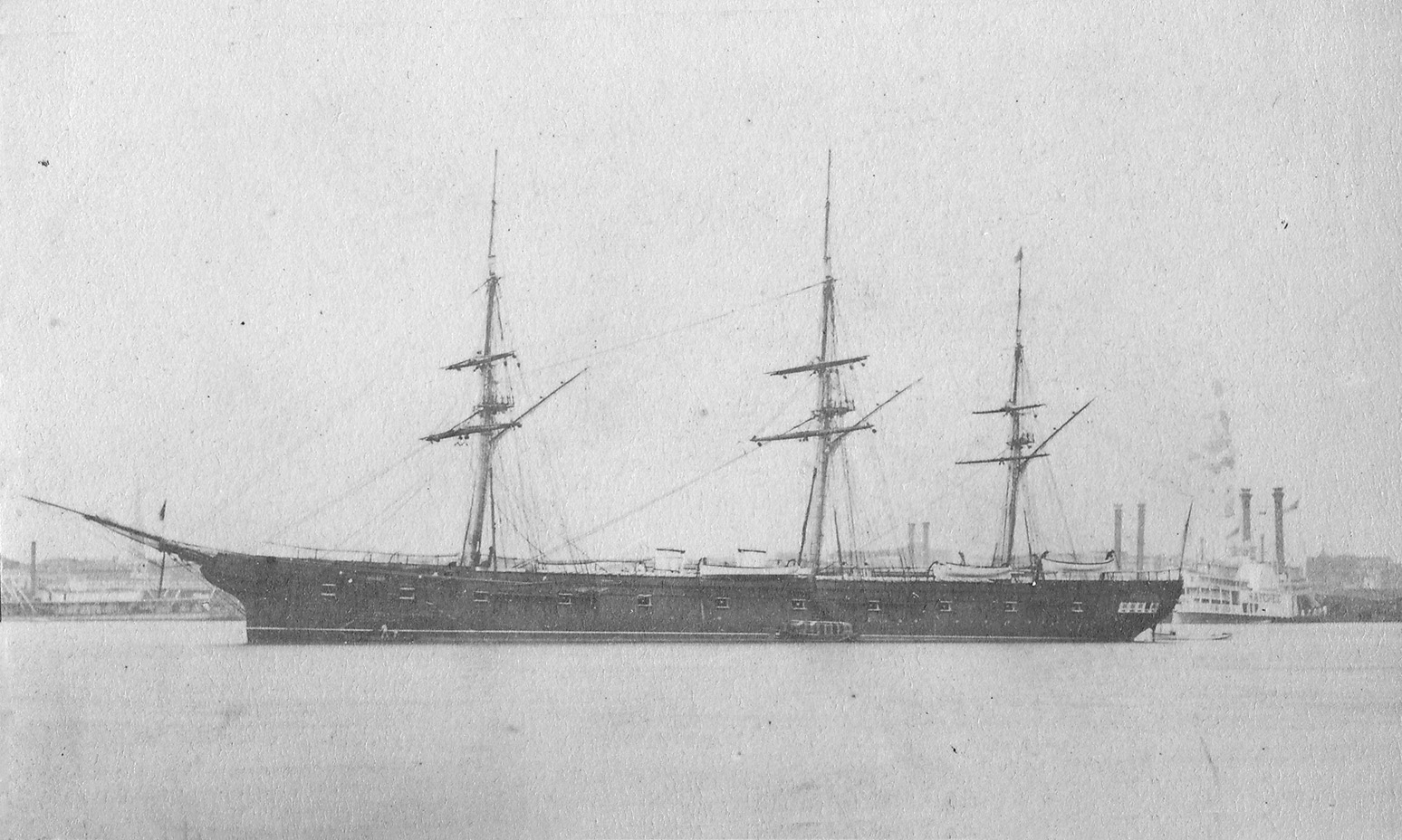
USS Worcester, ex Manitou (1866-1883) North Atlantic Station, 1871-1876. This ship was given a complete spar deck and quarter galleries before completion in 1871. She served as a receiving ship at Norfolk from 1877 to 1883. Photo No. NH 44958 Source: U.S. Naval History and Heritage Command |
 |
|
USS Congress, ex Pushmataha (1868-1883) North Atlantic and European Stations, 1871-1876. A spar deck was added during construction although she did not get quarter galleries. She is shown with the Venice waterfront in the background in 1874 or 1875. Photo No. 19-NC-4858 (NAID 353696453) Source: NARA RG-19 (also NH 61487) |
 |
|
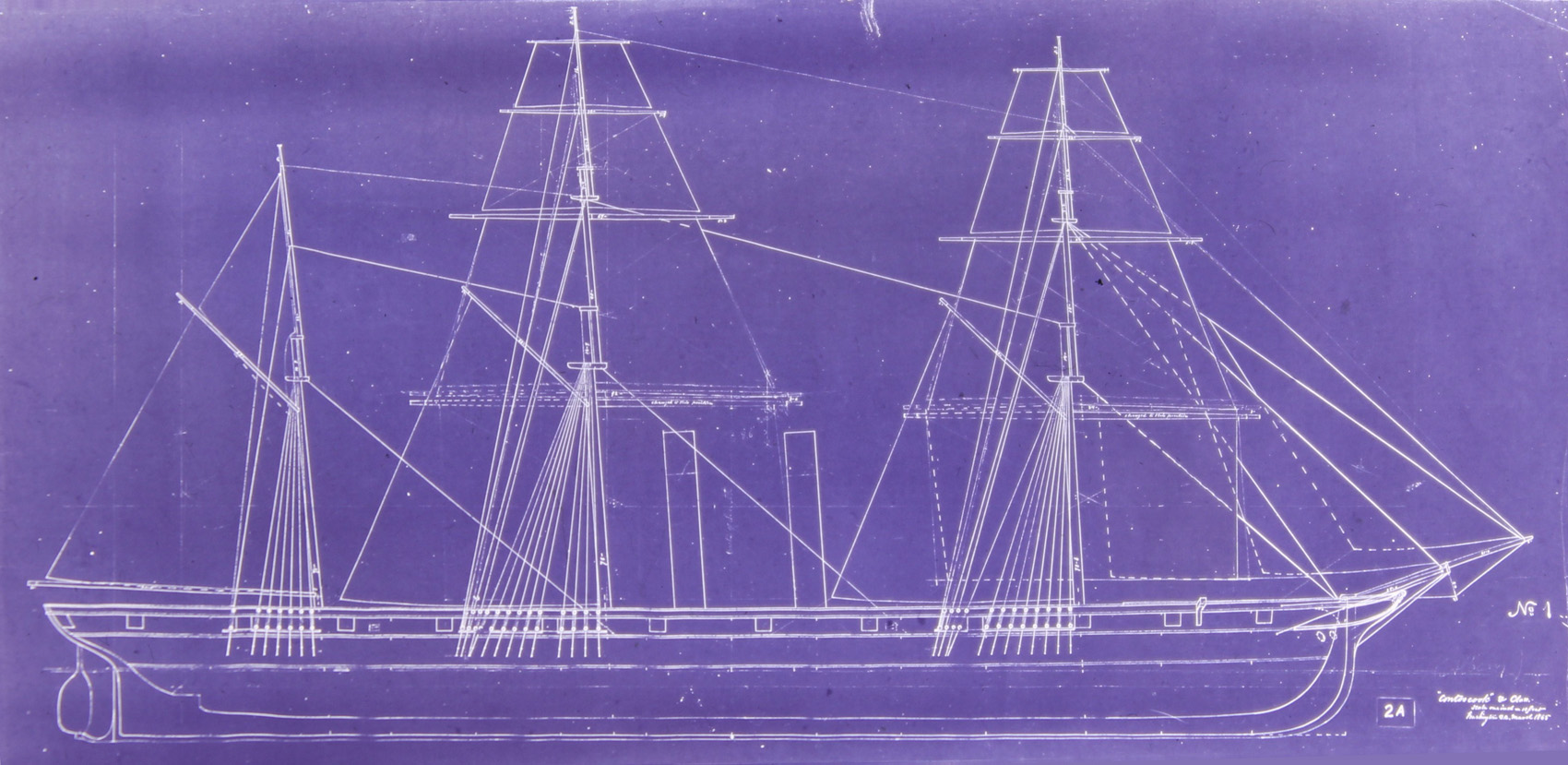
USS Albany, ex Contoocook (1864-1872) North Atlantic Station, 1868-1870. In March 1864 Contoocook was assigned an armament of one pivoted 60-pdr Parrott rifle on a short forecastle, two 24-pdr howitzers and two 20-pdr bronze rifles on a poop, and eight 9" Dahlgrens in an open broadside battery without a spar deck. She was completed thus in 1868 but had another six 9" guns added to the battery in October 1869. This rigging plan of "Contoocook & Class" without a spar deck was produced at Washington, D.C. in March 1865 and used at the Portsmouth, N.H. Navy Yard and is presented here as merged from two NARA images. Download large copy here. Photo No. NAID 7368237 Source: NARA Boston (Waltham), RG-181 |
 |

-- Trenton
| Note: Designed as an enlarged copy of Lancaster (1858) with similar lines, one-sixth more displacement, and an 8-foot ram. In turn a similar ram was added to Lancaster when that ship was completely rebuilt in 1879-80. |
|
USS Trenton (1876-1889) European, Asiatic, and Pacific Stations, 1877-1889. Photo No. NH 299 Source: U.S. Naval History and Heritage Command |
 |
-- Charleston
| Note: On 3 March 1885 Congress authorized "two cruisers of not less than 3,000 nor more than 5,000 tons displacement" (the 1st Rank Newark and Charleston). |
|
USS Charleston (Cruiser No. 2, 1888-1899) Pacific, Asiatic, and South Atlantic Stations, 1889-1896. The plans for this ship, essentially those for the highly regarded Japanese Naniwa, were purchased in England from Armstrong. The plans for the ship's engines gave much trouble, and the U.S. had to substitute pairs of 6" guns for the intended single 8" guns at the ends because the mountings for the latter were not ready. Photo No. NH 63594 Source: U.S. Naval History and Heritage Command |
 |