EFC Design 1001 (Ferris type): Notes & Illustrations
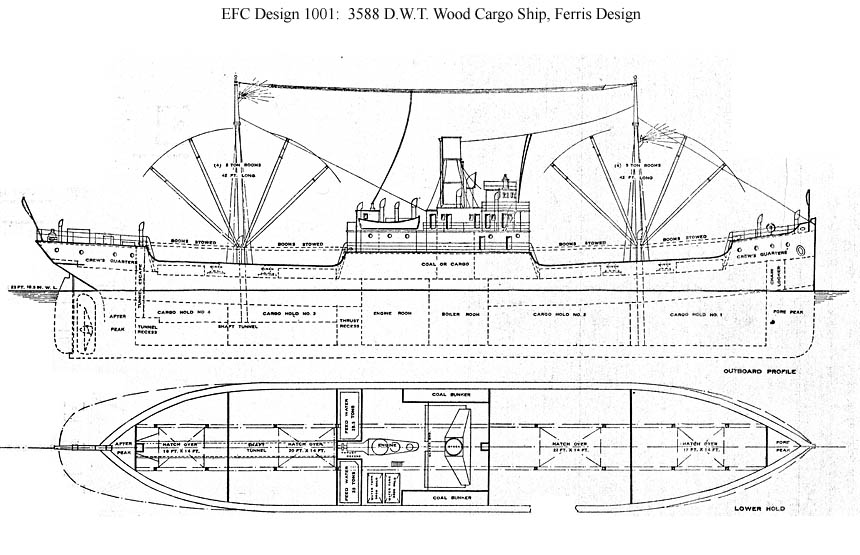
Click here for larger and more complete plans from the 1920 USSB ship register: Sheet 1, Sheet 2, Data
Click here for similar plans from International Marine Engineering, July 1917: Sheet 1, Sheet 2
Design 1001 ships delivered as barges and as hulls without engines are illustrated on the page for Design 1113 converted barges.
Click on the photographs below to prompt larger views of the same images.
|
Notes: Theodore E. Ferris was an independent naval architect in New York with a thriving practice when on 27 April 1917 General Goethals asked him to become a naval architect and consulting engineer for the new Emergency Fleet Corporation. Under this appointment he became the final technical authority for approval or rejection of all plans and designs for ships which were submitted by shipbuilders bidding for EFC contracts, which had to receive his approval before construction contracts were awarded. His most important work, however, was the standardization of plans and specifications for both steel and wooden vessels. He personally completed designs and specifications for eight types of steel vessels (Designs 1019, 1020, 1022, 1023, 1024, 1026, 1029, 1033) and two types of steel tugs (1035, and 1036), and reviewed and accepted standardized designs of ship-builders for four more types of steel ships (1025, 1027, 1032, and probably 1034) and two of steel tankers (1030 and 1031). There was also the "Ferris type" wooden cargo ship (Design 1001). Ferris relinquished his office in early 1918 but remained active with the EFC through the end of the war as a consultant. [www.marinelink.com/history/theodore-eferris] In May 1917 Ferris published the "Specifications for the construction of a standard wooden steamship, hull only, for the USSB/EFC" in two versions, a "Yellow Pine Ship" to be built on the East and Gulf Coasts and a "Douglas Fir Ship" to be built on the West Coast. The two types required different schedules of timber to be supplied by the sawmills because certain sizes were available in only one of the woods, leading to minor design differences. (Each southern yellow pine ship required 1,531,410 board feet of lumber according to the Lumber Trade Journal, and the number was probably similar for Douglas fir.) By this time most large wooden ships had some metal reinforcement to control torsional strains, and in his design Ferris provided a lattice of diagonal 4-inch wide iron straps on the outside of the hull from 12 feet forward of the forward hold to 12 feet aft of the after hold and extending from the top of the sides around and under the turn of the bilge. The straps were riveted at the top to an 8-inch wide iron top belt and the straps were also riveted together where they crossed. The ships were fitted with accommodations for a crew of 30 and a Goveernment gun crew of 12. The specifications included the statement that "Twin-screw and geared turbine steam propelling machinery may be substituted subject to approval of owners [the EFC]," and one builder adopted the twin screw option, for which see Design 1001-TS. Specifications: Design 1001 (Ferris, Yellow Pine Ship, for East and Gulf Coast builders). Wood hull. Deadweight tons: 3500 designed, 3588 actual. Dimensions: 281.8' oa, 268.0' pp x 46.0' ext, 45.2' mld x 23.9' load. Propulsion: 1 screw, 1 triple expansion engine, 2 EFC standard watertube boilers, 1400 IHP, 10 knots. Configuration: 1 deck probably with 'tween deck beams, 2 holds, 4 hatches. (from a USSB plan) Specifications: Design 1001 (Ferris, Douglas Fir Ship, for West Coast builders). Wood hull. Deadweight tons: 3500 designed, 3563, 3575, and 3688 actual. Dimensions: 281.5' oa, 268.0' pp x 46.0' ext, 45.2' mld x 26' depth mld, 23.5' draft load. Propulsion: 1 screw, 1 triple expansion engine, 2 single-ended Scotch or watertube boilers, 1400 IHP, 10 knots. Configuration: 1 deck with 'tween deck beams, 2 holds, 4 hatches. (from Ferris's specifications for the "Douglas Fir Ship") |
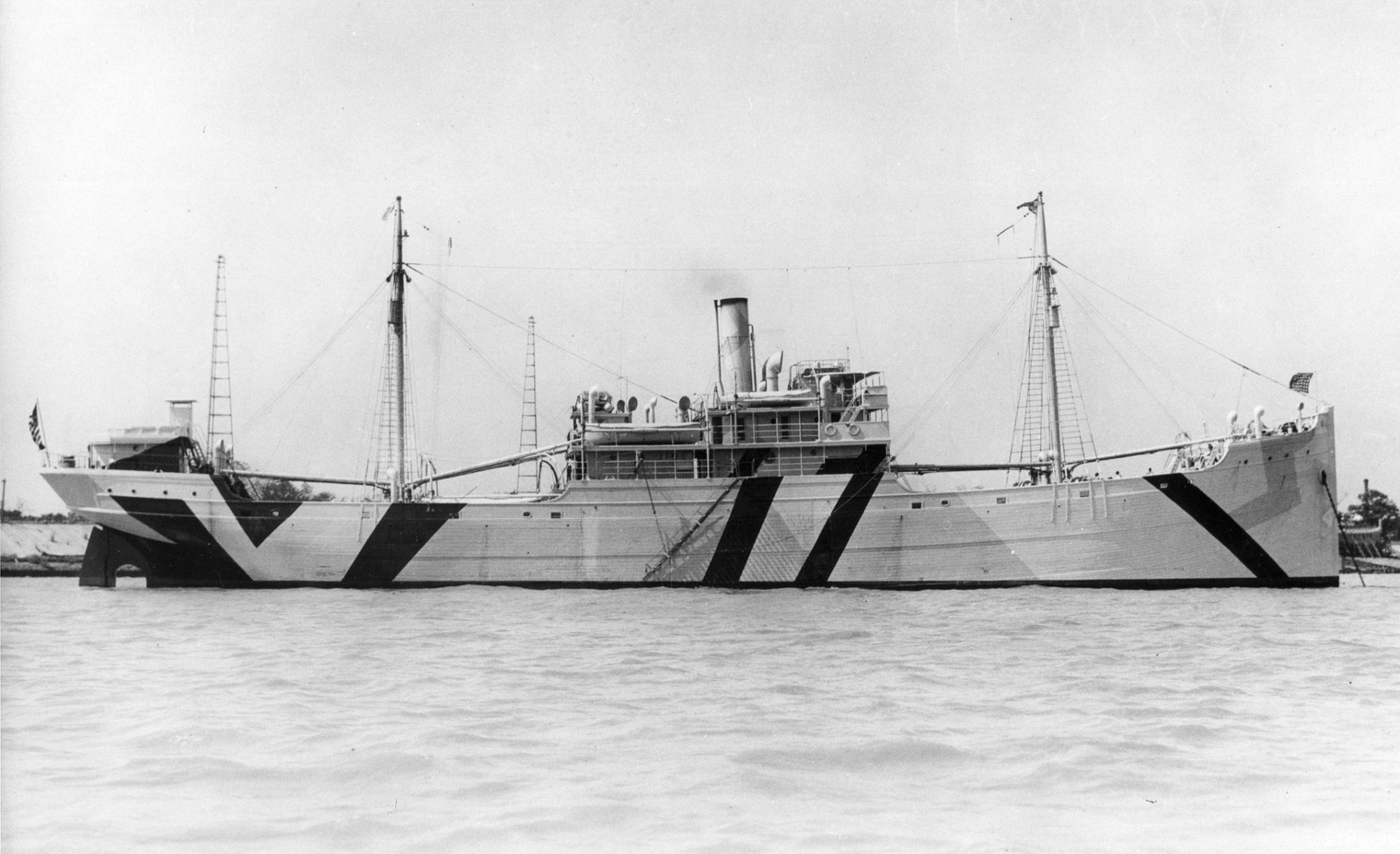
| USS Banago (Design 1001, EFC Hull 332). This Ferris-type ship was built by the Alabama D.D. & S.B. Co. of Mobile, Ala. She is probably shown here soon after her completion in September 1918. This ship was in commission in the Navy from September to December 1918. (U.S. National Archives, RG-19, 19-N-14856) (Click photo to enlarge) |
|
USS Banago (Design 1001, EFC Hull 332) The first of two Design 1001 (Ferris type) wooden ships built by the Alabama D.D. & S.B. Co. of Mobile, Alabama. She was delivered for operation on 25 September 1918. Photo No. 19-N-14793 Source: U.S. National Archives, RG-19 |
 |
|
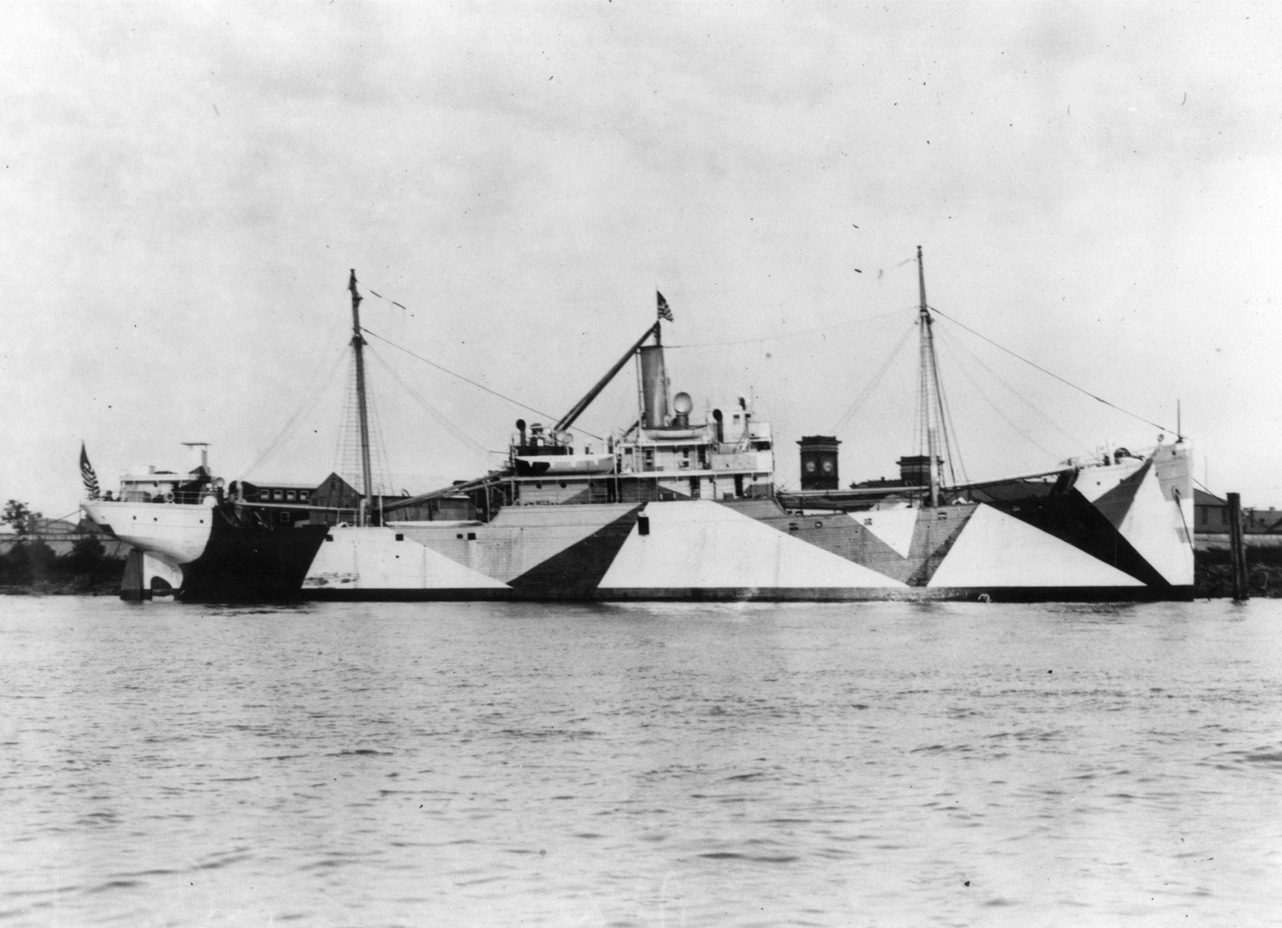
USS Pascagoula (Design 1001, Hull 279) The first of five Design 1001 ships completed by the Dierks Blodgett S.B. Co. of Pascagoula, Miss. She was delivered on 30 September 1918 for operation by the Navy. Photo No. 19-N-14790 Source: U.S. National Archives, RG-19, from copy at NHHC |
 |
|
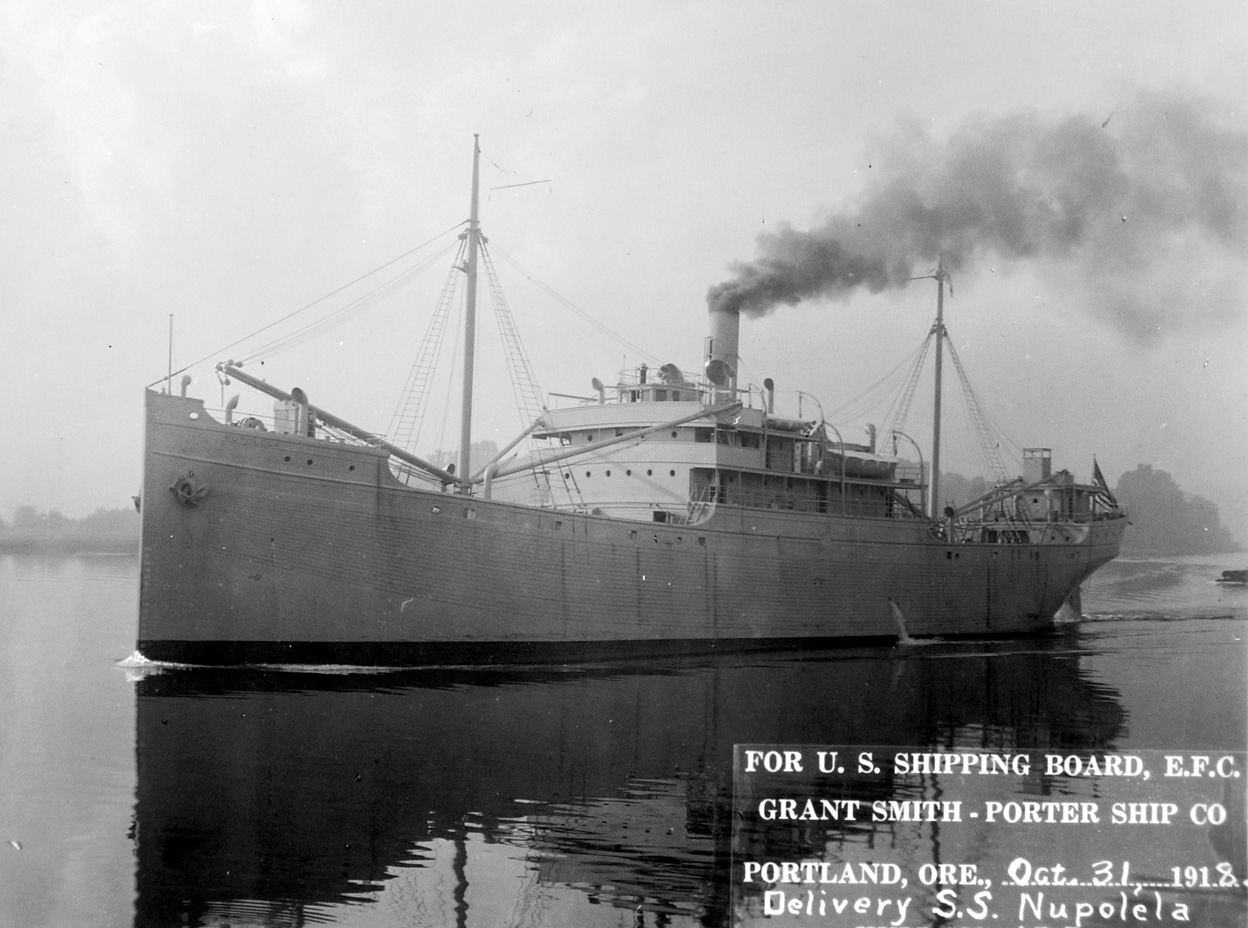
S.S. Nupolela (Design 1001, Hull 1357) This ship was built by the Grant Smith-Porter Ship Co. at Portland, Ore., and was photographed on the day of her delivery on 31 October 1918. Photo No. None Source: U.S. National Archives, RG-165-EO Album 2-C |
 |
|
S.S. Chibiabos (Design 1001, Hull 392) This ship was built by L. H. Shattuck Inc. of Portsmouth, N.H., and photographed on 24 October 1918. She was delivered on 14 November 1918. Photo No. None Source: U.S. National Archives, RG-32-M box 13 |
 |
|
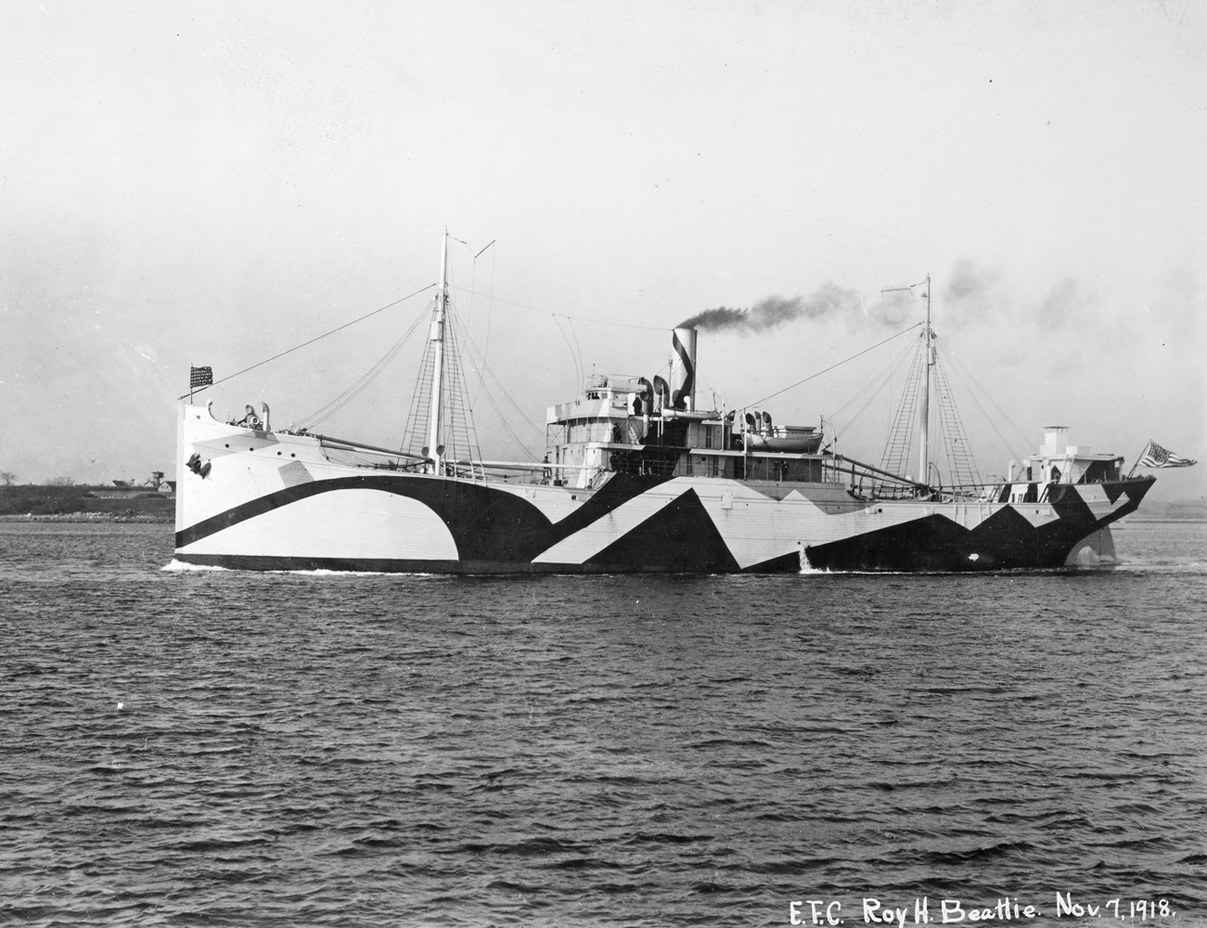
S.S. Roy H. Beattie (Design 1001, Hull 391) This non-standard name was assigned to EFC Hull 391 (ex Croxton) on 26 June 1918, having been chosen by the successful bidder in a Red Cross auction. The bidder, H. W. Putnam, named the ship after the Assistant Manager of the Wooden Ship Division of the EFC, who was present at the launching of this and two other ships by L. H. Shattuck Inc. at Portsmouth, N.H., on 4 July 1918. The other ships were Chibiabos and Milton, the latter having been named for the largest over-subscribed place in the New England District. This photograph was taken on 7 November 1918, the ship was delivered for operation on 7 March 1919, and she burned at sea on 18 April 1919 on a voyage between Norfolk and Brazil. Photo No. 165-WW-505A-043 Source: U.S. National Archives, RG-165-WW |
 |
|
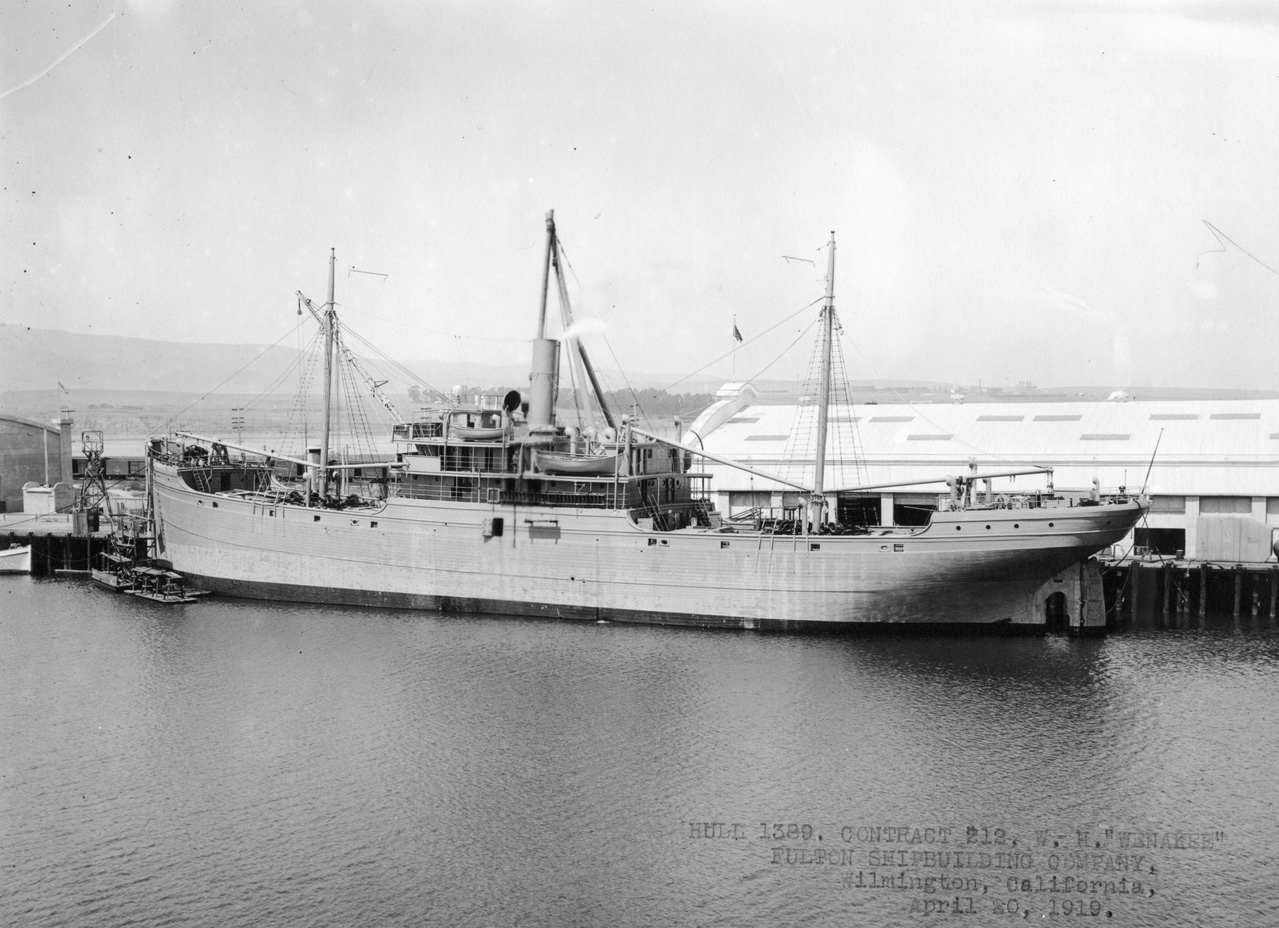
S.S. Wenakee (Design 1001, Hull 1389) This ship was the second of two Design 1001 ships completed as such by the Fulton S.B. Co. of Wilmington, Cal. Three later hulls were completed as barges. Wenakee was photographed on 20 April 1919 four days before her delivery. Photo No. None Source: U.S. National Archives, RG-32-UB |
 |
|
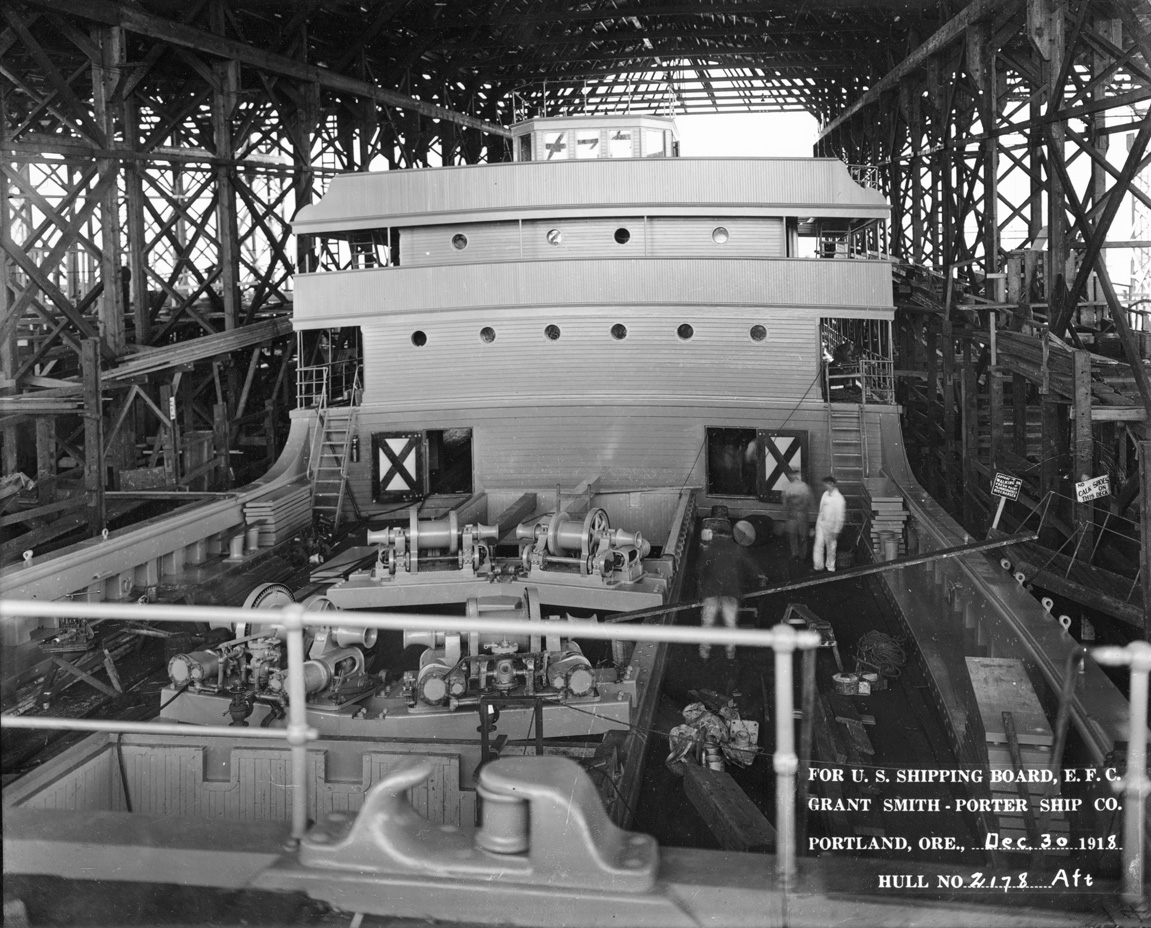
S.S. Ahala (Design 1001, Hull 2178) This ship was built by the Grant Smith-Porter Ship Co. at Portland, Ore., and was photographed on her building ways (covered to permit work at night) on 30 December 1918, the day of her launching. Note the four cargo winches clustered around the location for the base of the foremast. She was delivered on 5 June 1919. Photo No. bb000291 Source: Oregon Historical Society Library, Kiser Photo Co. Collection. |
 |
|
S.S. Blue Eagle (Design 1001, Hull 469) This ship was launched on 4 July 1918 by Geo. F. Rodgers & Co. of Astoria, Ore., and delivered in August 1919. Photo No. 165-WW-505A-013 Source: U.S. National Archives, RG-165-WW |
 |
|
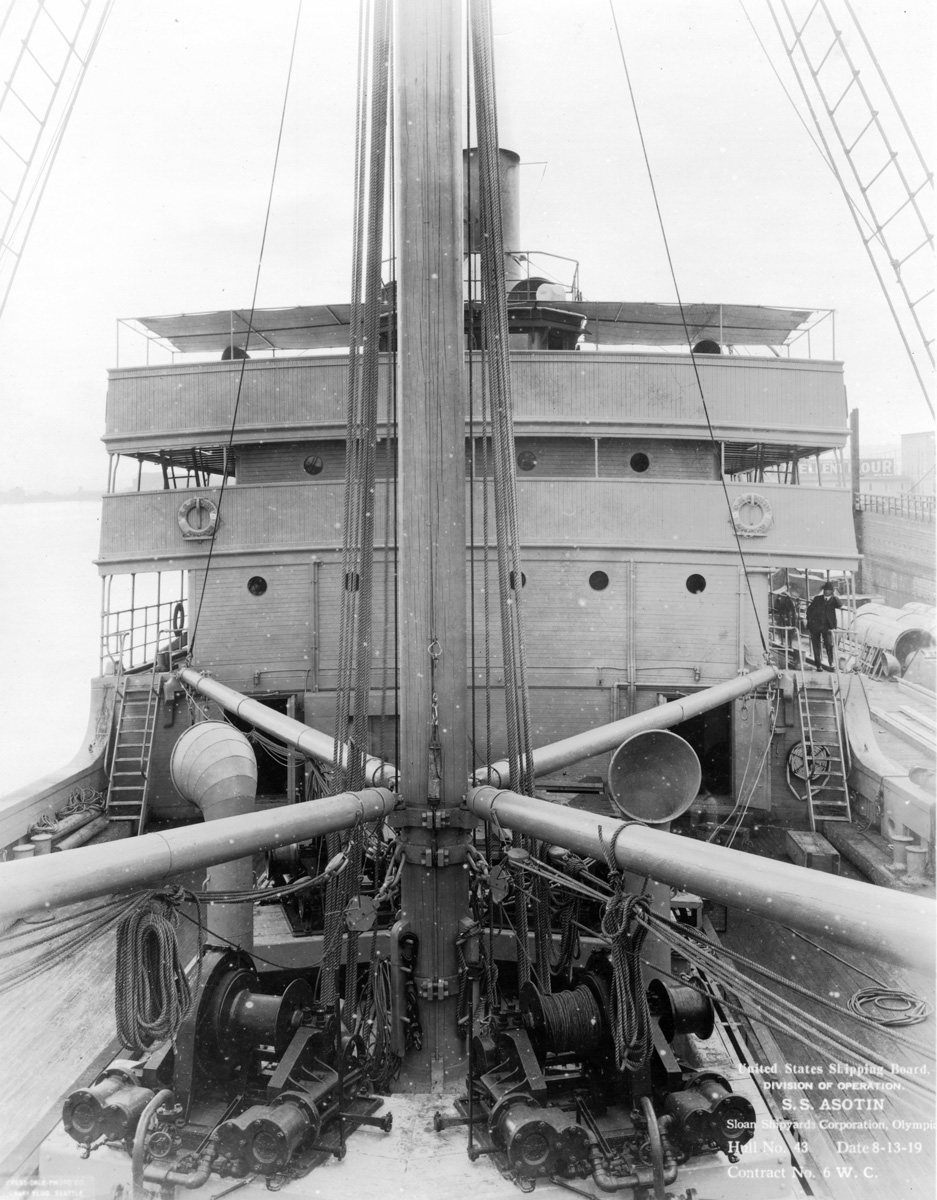
S.S. Asotin (Design 1001, Hull 43) This ship was ordered from the Sloan Shipyards Corp. of Olympia, Wash., and her construction was subcontracted to the Anacortes S.B. Co. of Anacortes, Wash. She was photographed on 13 August 1919, a few days before her delivery. Photo No. None Source: Shipscribe |
 |
|
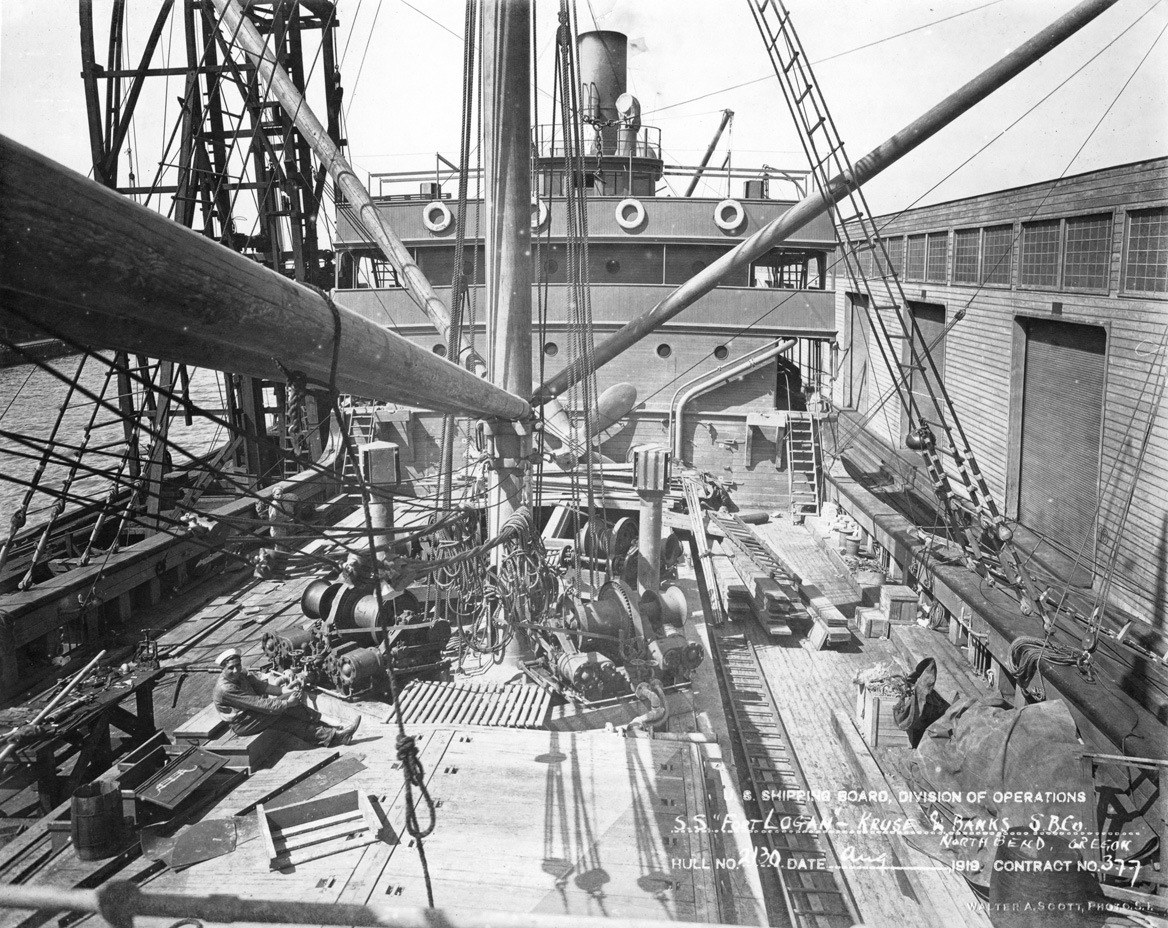
S.S. Fort Logan (Design 1001, Hull 2130) This ship was built by Kruse & Banks Shipbuilding of North Bend, Ore, and was photographed in August 1919 by Walter A. Scott of San Francisco a month before her delivery. Photo No. None Source: Shipscribe |
 |
|
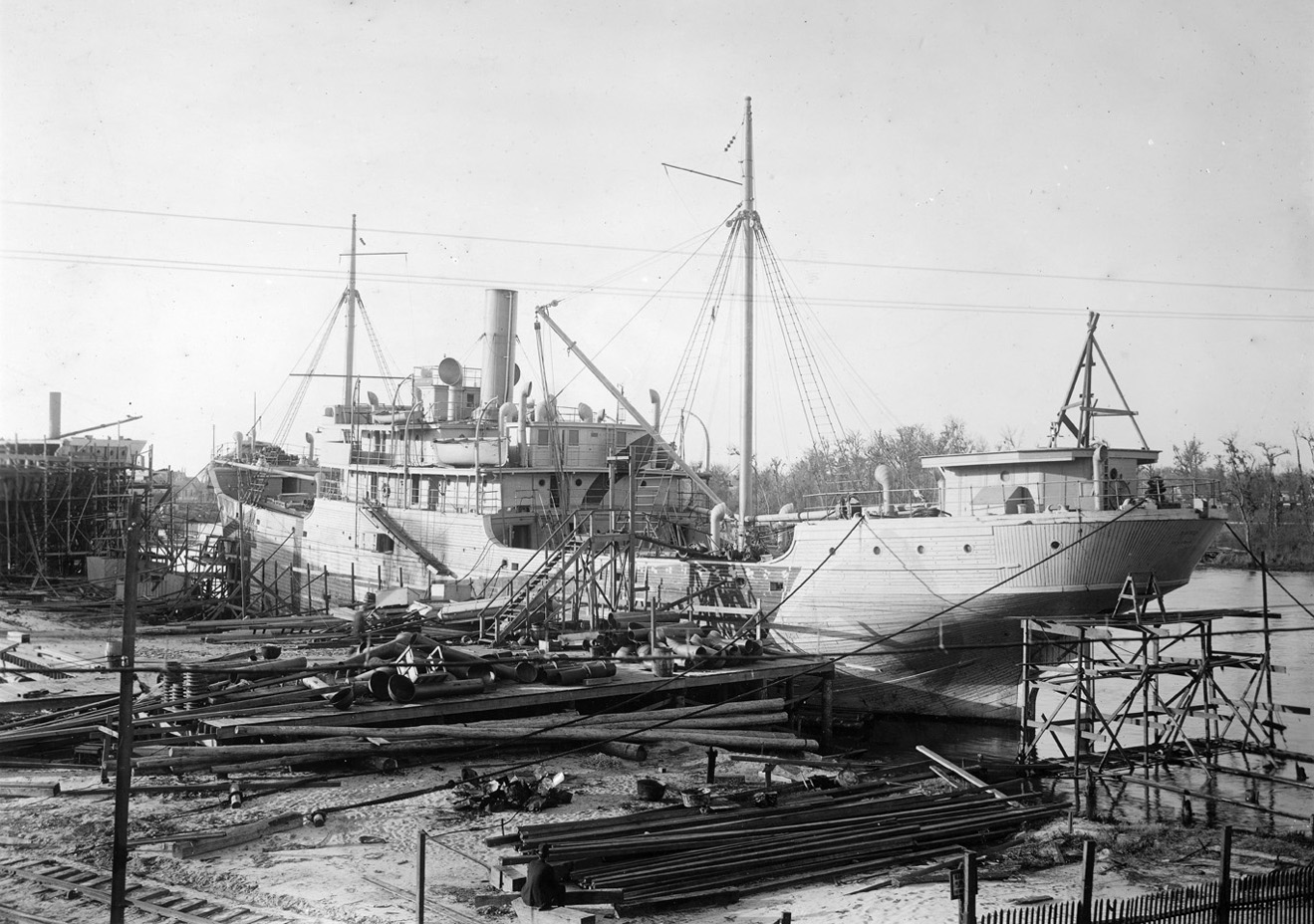
S.S. Basco (Design 1001, Hull 158) This ship was built by the Universal S.B. Co. located in the Houston Ship Channel, Texas, and launched on 15 May 1918. This photo was dated 22 February 1919 and the ship was delivered a year later, in February 1920. Photo No. 165-WW-505A-007 Source: U.S. National Archives, RG-165-WW |
 |
Design 1001 ships delivered as barges and as hulls without engines are illustrated on the page for Design 1113 converted barges.